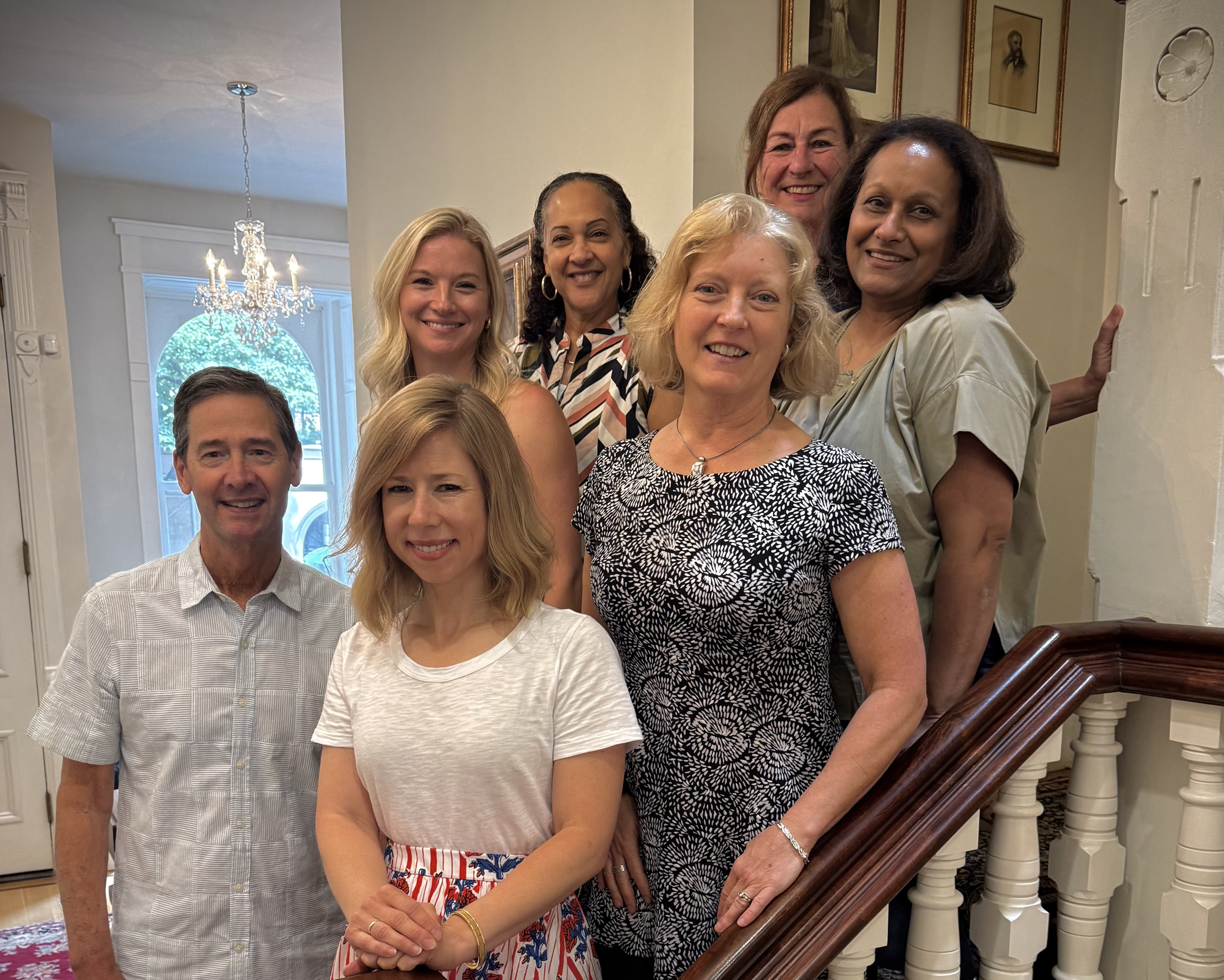
In my short tenure as President here at the Josiah Macy Jr. Foundation, I have learned a great deal and have, of course, generated many questions. However, I am already certain of one thing: our Macy staff are highly skilled and intensely devoted to our mission of improving health by advancing the education and training of health professionals. Many of you are aware that my widely admired predecessor, Holly J. Humphrey MD, MACP, passed away in April of 2025. Though the Macy community and staff felt the loss of her leadership deeply, they were not paralyzed. With the support of our engaged Board of Directors, the Foundation continued its important work—a powerful way to honor Holly’s legacy.
This perseverance is illustrated by a unique program that the staff quietly conducted over the past year. The team was dismayed by shifting institutional priorities, dismantling of programs, and sudden reductions or cessation of funding for efforts to promote diversity, equity, and belonging in health professions education. Issues of equity are fundamentally issues of quality. Inconsistencies in outcomes among learners and patients reflect flaws in our systems that must be addressed. The staff developed a rapid response process, and the Macy Board authorized the distribution of bridge funding to prior Macy investigators whose critical work was jeopardized in the current landscape.
Focusing on investigators who had been previously vetted by the Macy president and/or through a rigorous review process enabled an alacrity in decision-making aligned with the urgency of need. In 2026, nearly $300,000 will be distributed to initiatives across health professions, such as increasing cognitive empathy in the learning environment, strengthening the infrastructure for accommodations in clinical learning environments, and nurturing future faculty by encouraging learners to envision and pursue academic careers. Such programs ultimately improve the experiences of all learners and their future patients. Without fanfare, this targeted offering solidified the impact of prior Macy investments in programs and people.
Adaptable organizations focus more on outcomes than on preserving existing processes. They do not shy away from ambiguity. While maintaining a steadfast sense of purpose, they embrace novel avenues to effect results. I doubt that the Macy team purposefully approached this issue with the intent to perform as an “adaptable organization.” Yet, without depending upon a strategic retreat or task force which would have delayed action, they displayed agility. The staff responded on a much more human level. They saw dedicated educators suffering from broken promises. These educators had responded to direct requests from their institutions and funders to drive improvement. I acknowledge that many of the organizations involved had limited control over the circumstances. But my team witnessed the abandonment of real people whose aspirations had been dashed— and created a mechanism to help.
Education is grounded in relationships. Our health professions attract talented, altruistic young people who rely upon the wisdom and guidance of their teachers and supervisors to develop to their full potential. Caring for those educators is crucial to modeling adaptive learning and growth across one’s career. Although the funding Macy provided over the past year barely touches the depth of need, it validates those relationships. The Macy Foundation stands by the educators who help both learners and fellow professionals thrive. That is the path to ensuring our health professionals are optimally poised to advance the health of patients and communities. I am proud to join this Macy team and am eager to surface the many other gems of hope scattered across our Macy community.